
23 February 2026
The many ways to commemorate ANZAC Day
Like most things, ANZAC Day rituals have evolved over the last 100-plus years. However, 25 April remains an important time for Australians and New Zealanders to gather, reflect, and recognise all who have served or sacrificed.
From the moving atmosphere of a Dawn Service to the lively energy of two-up or the syrupy smell of freshly baked biscuits, here’s just a few of the ways you can commemorate ANZAC Day.
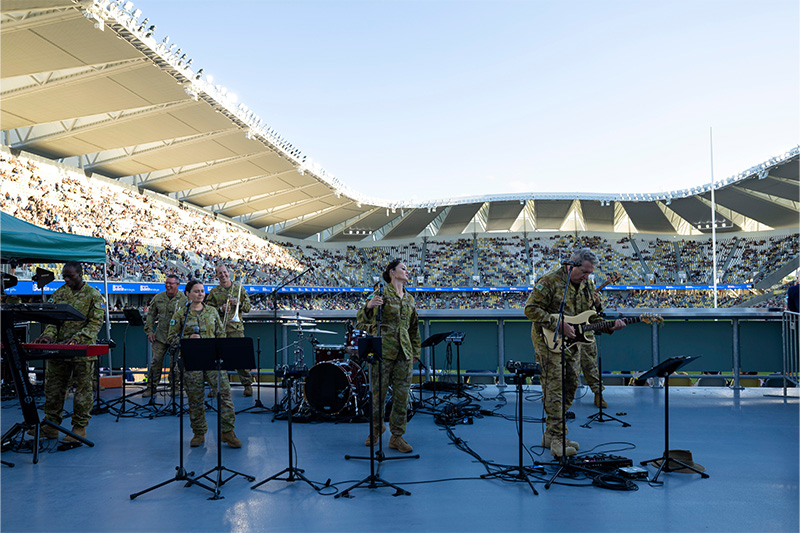
On 26 April 2025, Australian Army soldiers from the 1RAR band perform during the NRL Cowboys ANZAC Round at Queensland Country Bank Stadium, Townsville, Queensland. Image credit: Department of Defence
Attend a service or march
Nothing captures the meaning of ANZAC Day quite like a commemorative service or march, and thousands take place nationwide on 25 April.
Run by the RSL, these free events give communities a chance to collectively reflect and honour those who have served and sacrificed.
If you can’t attend a service or march in person, you can always tune in live through the ABC or a play a recorded service.
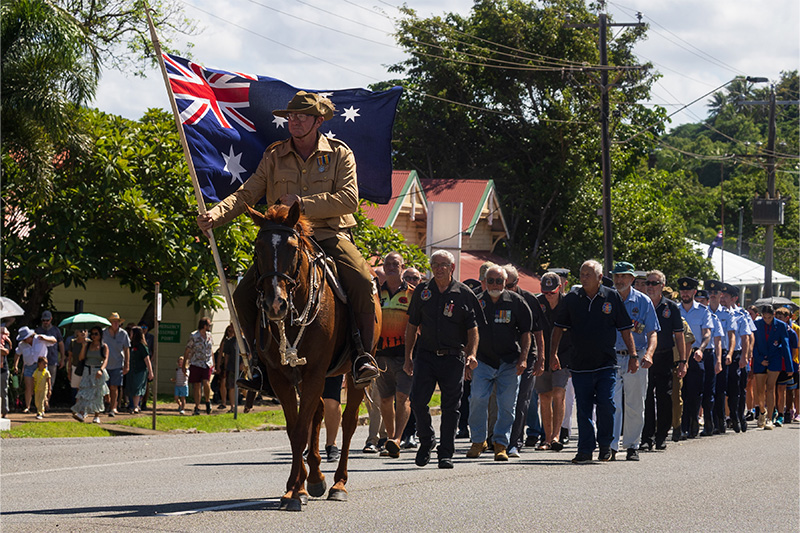
Australian Defence Force personnel, veterans and high school students march during ANZAC Day commemorations in Cooktown, Queensland. Image credit: Department of Defence
Enjoy a gunfire breakfast
Back in the 19th century, British soldiers started their day with rum-laced tea (a.k.a. ‘gunfire’) – a liquid shot of courage for the battle to come.
This tradition made its way into Australian and New Zealand ranks and gradually into ANZAC Day custom.
Nowadays, after their ANZAC Day Dawn Service, many RSL Sub Branches serve what’s known as a ‘gunfire breakfast’ – typically tea or coffee mixed with rum, plus cooked food like bacon and eggs.
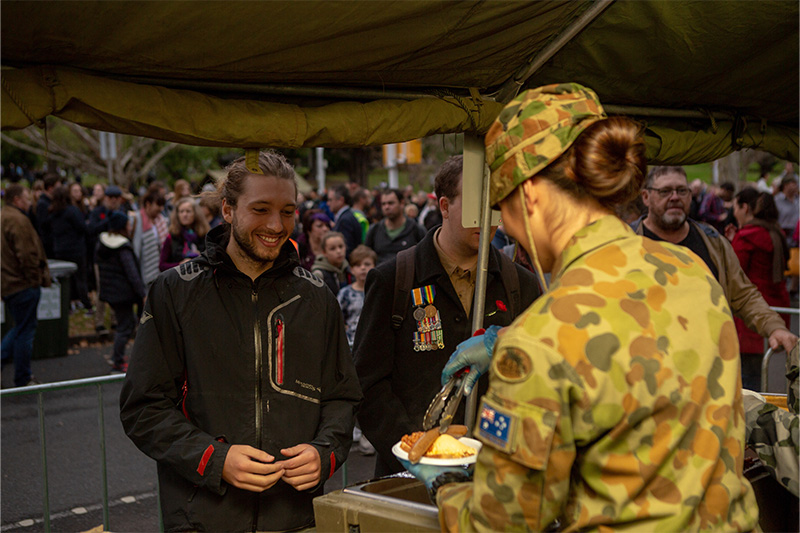
Image credit: Department of Defence
While some gunfire breakfasts may be reserved for veterans, many are open to everyone, giving veterans and other community members a great opportunity to meet and chat.
Ask if your local Sub Branch is hosting one, or why not host your own for your friends and family?
Explore history
One of the best ways to understand and appreciate ANZAC Day is to delve into Australia’s military history.
Fascinating displays and powerful stories can be found in museums, on memorial trails and at wartime sites across the country. (While some museums may be closed on ANZAC Day, outdoor trails and sites are generally accessible year-round.) Check out Anzac Portal for a few ideas.

Part of The Centenary of ANZAC Memorial Walk, Emu Park, Queensland
If you have relatives who served, the Australian War Memorial Research Centre has some great tips to help you explore your family’s military history.
Bake ANZAC biscuits
For many Aussies and Kiwis, no ANZAC Day is complete without ANZAC biscuits – golden, oaty treats beloved by generations.
According to culinary historian Allison Reynolds, sweet biscuits (known as ‘Red Cross biscuits' and 'soldiers’ biscuits’) were baked during World War I (WWI) to raise funds for the war effort and lift the spirits of men serving overseas.
It took a few more years for the ANZAC biscuit recipe we know and love today to become standard. It’s about as simple as baking gets, and the results taste like a warm hug from home.

Wear or make a rosemary tribute
While the red poppy traditionally symbolises Remembrance Day, rosemary – which grows wild around Gallipoli – has deep significance to ANZAC Day. You’ll often see rosemary displayed on ANZAC Day in honour of those who have served.
Many simply wear a rosemary sprig or badge near their collar. (These are often sold as fundraisers by RSL Sub Branches or charity partners.)

However, there are lots of other creative ways to display this symbol on ANZAC Day. Here’s just a few ideas:
Decorate the house with fresh rosemary – perhaps with a beautiful handmade rosemary wreath.
Draw, paint, sew or knit a unique floral tribute.
Cook or bake something with rosemary – perhaps rosemary focaccia, a herby autumn vegetable salad, rosemary-marinated roast chicken, or lemon and rosemary cake.
Play two-up
ANZAC Day is one of the only days when you can legally play two-up – a lively, social game of chance often played by Aussie and Kiwi troops in WWI.
Two-up is normally outlawed as unregulated gambling. However, around ANZAC Day or other commemorative days, the laws (which vary by state) relax a little in recognition of the game’s special cultural significance.
With any entry fees or wagers going to charity, it’s all played in good fun and for a good cause.
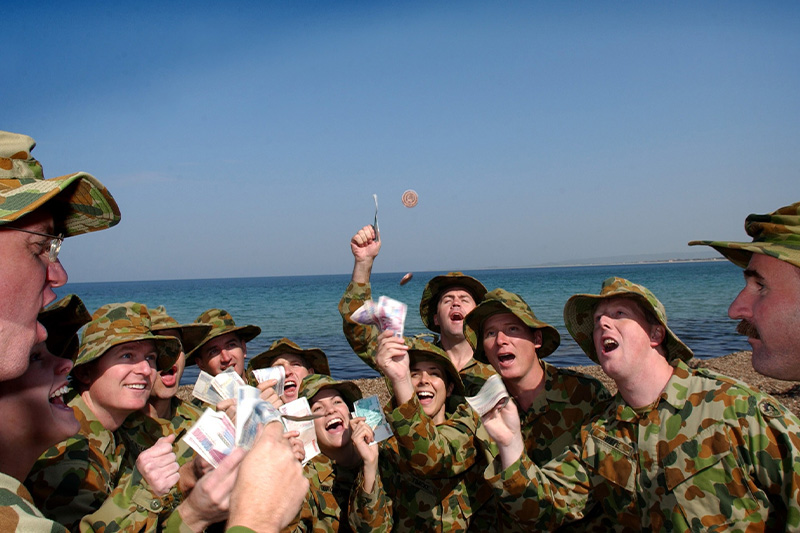
Members of the 2003 Gallipoli Contingent enjoy a traditional game of two-up on North Beach at Gallipoli during a break from rehearsing for ceremonial duties. Image credit: Department of Defence
Support the veteran community
Making a donation – or volunteering your time – is a small but meaningful way to give back to those who’ve given so much for our nation.
Consider supporting the ANZAC Appeal or another charity that helps veterans and their families. You could also attend a charity event like Run Army or the ANZAC Round of your favourite sport, or run your own fundraising drive.
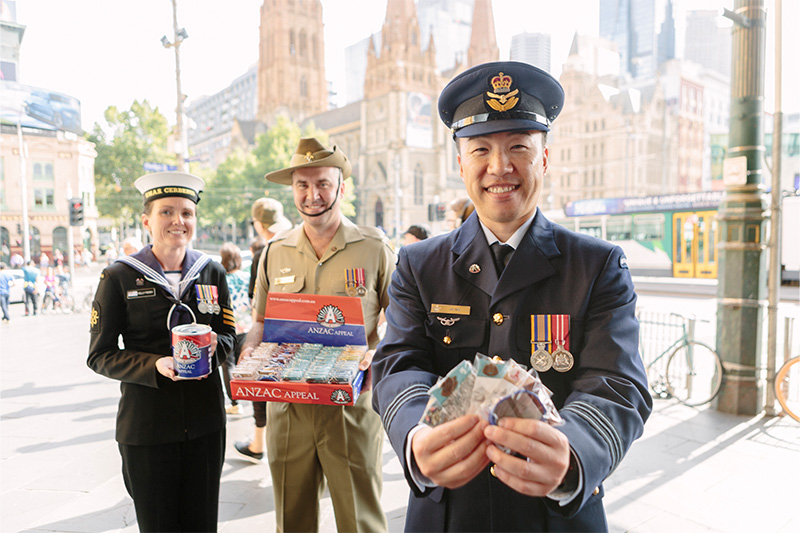
LS Kelly Perry, WO2 Adam Gordon and SQNLDR Ian Pak raising funds for the ANZAC Appeal. Image credit: Department of Defence
You could also volunteer to help your local RSL Sub Branch – whether through fundraising, helping with ANZAC Day event proceedings, or supporting veterans and their families who might need a hand.
Let’s show the ANZAC spirit lives here.
ANZAC Day is more than simply a date on the calendar.
It’s a time for Australians and New Zealanders to come together and honour the courage, sacrifice and mateship of all who have served.
It’s a call to carry those values forward every day, and a reminder of just how lucky and grateful we are.
So, whether you join a Dawn Service, pause at home in quiet reflection, or share stories with family and friends, your participation matters. Every action, big or small, honours the ANZACs and shows us that the ANZAC spirit lives here.
This ANZAC Day
ANZAC Day (25 April) is a time to recognise all who have served our nation, and their invaluable legacy.
Wherever you’ll be on ANZAC Day, please join the community in attending a commemorative service.
There’s no greater way to honour those who have served.