
09 April 2026
WWII, survival, and the ANZAC spirit: A centenarian’s story
It was a steamy morning in Bougainville, Papua New Guinea when shots rang out across the camp. Startled, Lloyd jumped to his feet, still groggy with sleep, only to be met by his fellow troops at the door; rifles cocked, beer in hand and broad grins spread across their faces.
It was celebratory fire they said – the war was over!
Though the hours that followed are now a little hazy – perhaps a few too many beers are to blame –- one memory remains; Lloyd was going home.
From Ipswich to Bougainville
As soon as Lloyd turned 18, he enlisted in the Royal Australian Air Force. It was a far cry from his job as an apprentice process engraver, but at a loose end boarding with family in Booval, Lloyd decided to take the leap.
“That was just the thing that people were doing at the time. My brother was in the Air Force. I thought, if it was good enough for him, it was good enough for me,” Lloyd says.
For three months, he was stationed in Sandgate before travelling to Sydney, then onto Melbourne to complete his training.
He was eventually posted to Amberley Air Base for Unit Duties, working on combat aircrafts, otherwise known as ‘Mosquitos’.
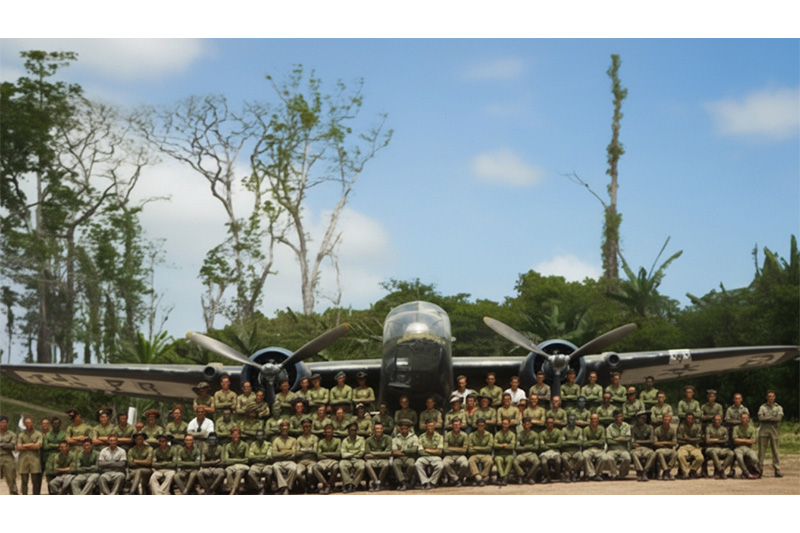
In July of 1945, Lloyd was deployed overseas to assist with the war efforts, arriving in Torokina, Bougainville on 10 August 1945.
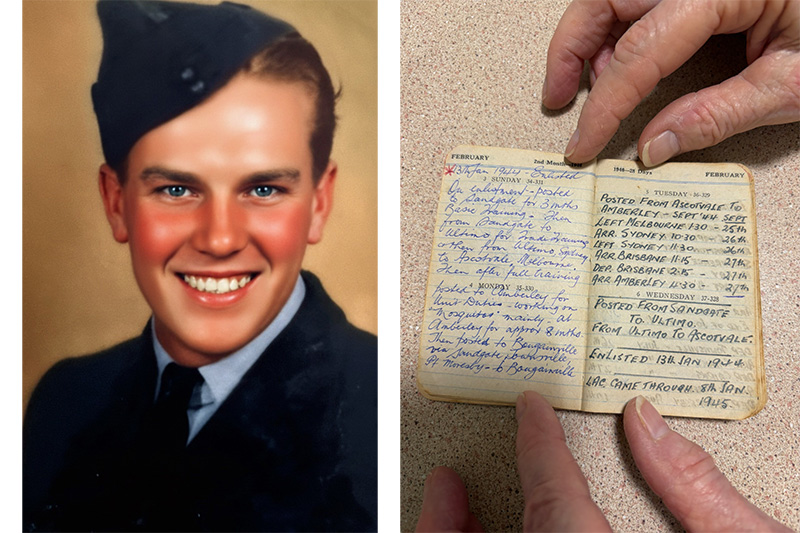
During his time on base, Lloyd worked as ground crew in the 10 Local Air Supply Unit (10 LASU) for the Royal Australian Air Force.
“I was a ground crew flight rigger. We had to maintain the planes and keep them flying,” he says.
“We travelled on Beaufort bombers which had been modified to become freight carrying aircrafts. It was very important to keep them running so troops on the frontline could receive supplies. They called us the ‘Biscuit Bombers’."
Coming home
Though a ceasefire had been announced in August of 1945, fighting continued for weeks afterwards. It wasn't until 1 March 1946 that Lloyd began the long journey home.
"Beaufort aircrafts flew over Japanese lines dropping leaflets to notify troops that the war was over, but they still fought,” Lloyd says.
“The next day, one of our LASU kites returned with a bullet hole in it. The Japanese troops continued to fight even after Lieutenant General Kanda signed surrender papers on 8 September 1945.”
“There were so many lives lost. You can’t help thinking, there for the Grace of God go I. It’s something that is with you for the rest of your life.”
Lloyd was eventually discharged on 7 March 1946 with the rank of Leading Aircraftsman, free to return to civilian life.
Upon leaving the Air Force, Lloyd married his sweetheart Leonie, "the most beautiful woman you’ve ever seen”, and raised two children, Denise and Raymond.
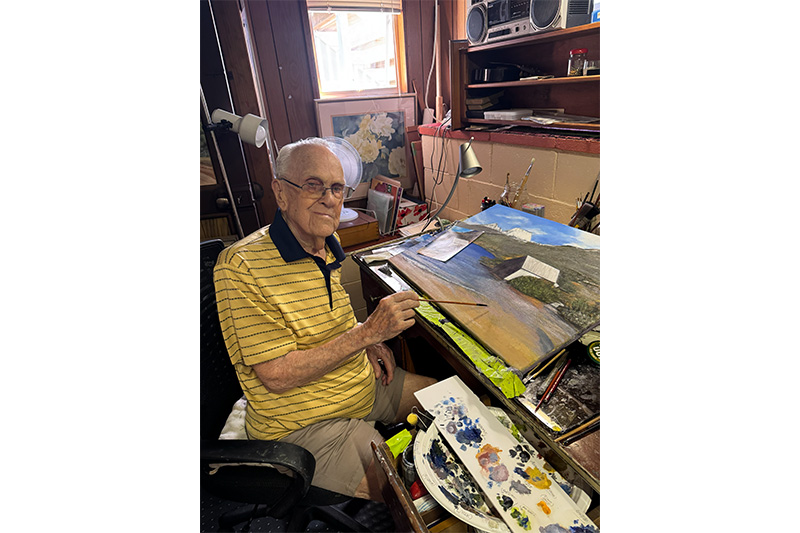
He returned to his childhood love of illustrating and painting, putting himself through art school so he could pursue a career in graphic art and advertising.
“When I was a kid, I used to sit up at nighttime. My father was an accountant. He brought a lot of work home and would often work until midnight. I used to sit up with him and draw. He'd be on one end of the dining table, and I'd be on the other end, drawing away. That’s where it all began,” Lloyd recalls.
Now, almost eight decades on, WWII planes have become the subject of many of Lloyd's paintings, adorning the walls of his Moorooka home where he’s lived for the past 72 years.
A day to remember
At 100 years old, Lloyd has been to his fair share of ANZAC Day services, but seeing people come together to commemorate is something that never grows old.
“It means a heck of a lot. It’s a day we can’t forget. It’s a sad time, but it’s also gratifying,” he says.
“People have to be reminded that if it wasn’t for the ANZACs, they wouldn't be here. It cost a lot of lives and it’s worth remembering.”
This year, Lloyd will be marking ANZAC Day at his local RSL Sub Branch in Salisbury where he is still an active member.
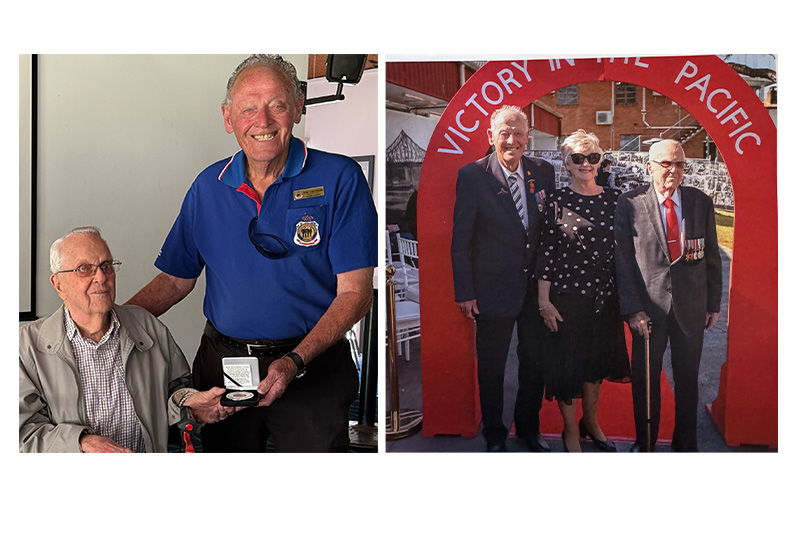
Daughter Denise says her dad’s courage and commitment is the same as it was when he enlisted in 1944.
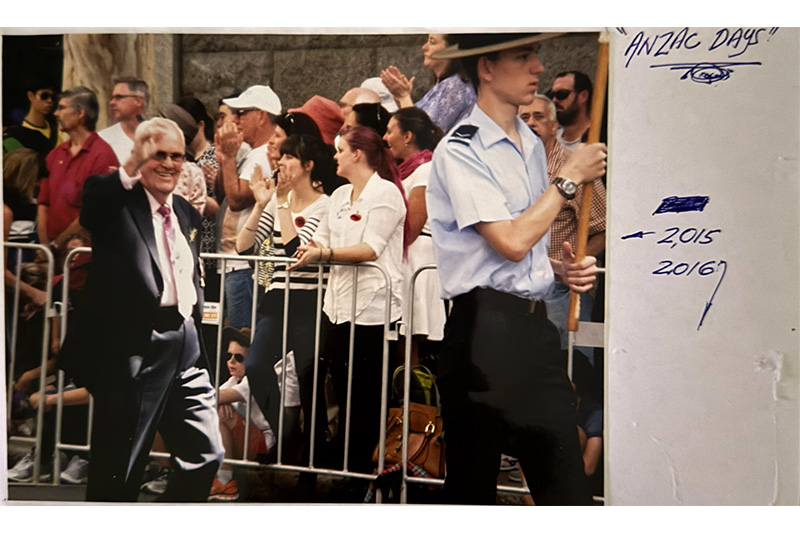
“For 32 years he took part in the ANZAC Day march through Brisbane City. He started marching when he was 60 years old and rode in a jeep for his last march at 92. He never missed one.”
“Dad wanted to march to show the younger generation how important ANZAC Day is. I‘m so proud of him.”
Let’s show the ANZAC spirit lives here.
ANZAC Day is more than simply a date on the calendar.
It’s a time for Australians and New Zealanders to come together and honour the courage, sacrifice and mateship of all who have served.
It’s a call to carry those values forward every day, and a reminder of just how lucky and grateful we are.
So, whether you join a Dawn Service, pause at home in quiet reflection, or share stories with family and friends, your participation matters. Every action, big or small, honours the ANZACs and shows us that the ANZAC spirit lives here.